

October 20 @ 11:00 am – 12:00 pm
McGaugh Distinguished Seminar Series
Tuesday, October 20th, 2026 at 11:00am
The seminar will be In-Person.
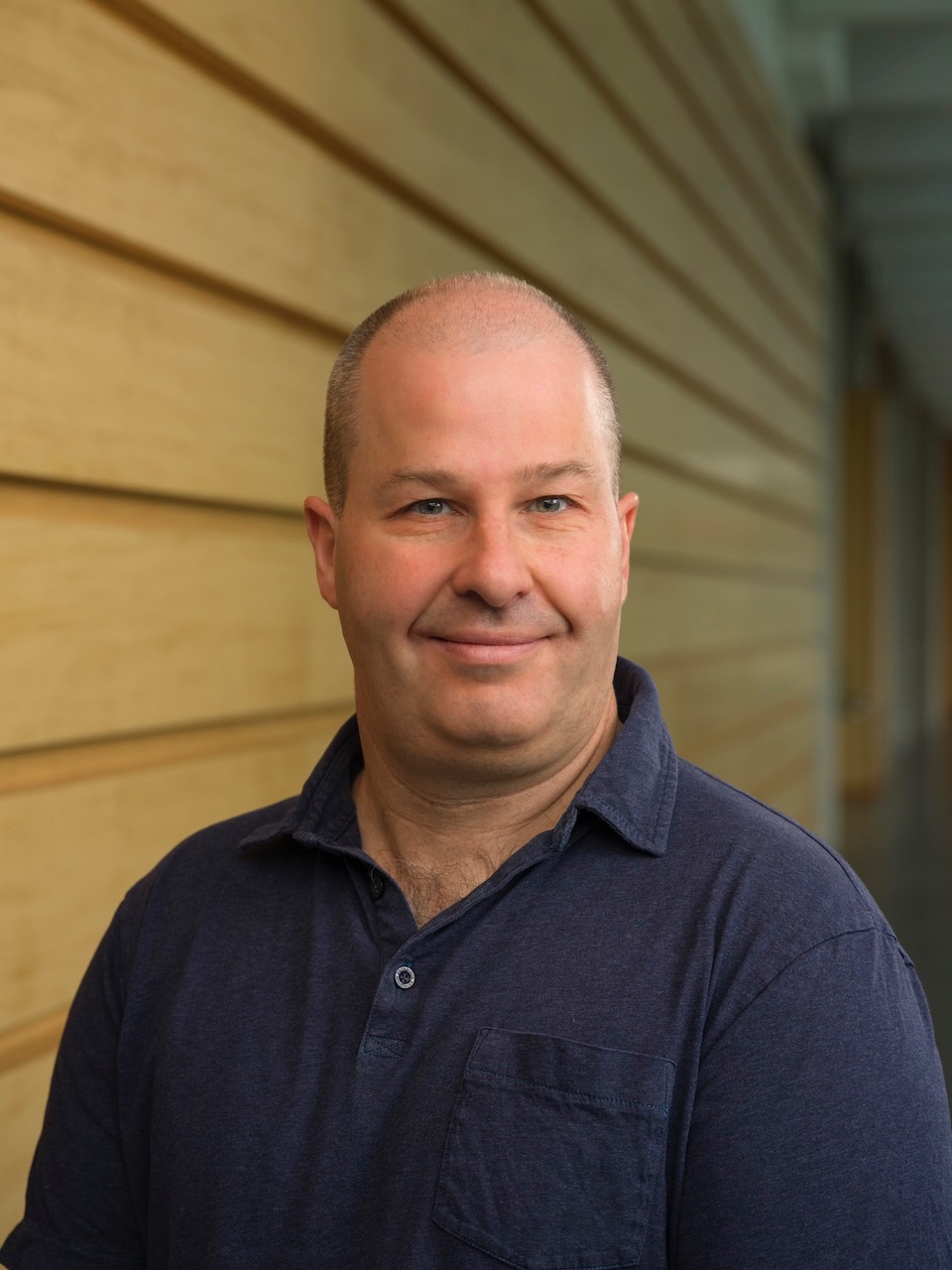
Loren Frank, PhD
Investigator, Howard Hughes Medical Institute and Professor, Departments of Physiology and Psychiatry, UCSF
Thinking and Doing
Abstract:
The brain has the remarkable ability to self-generate meaningful and distributed activity patterns (“thoughts”). Thoughts make it possible to simulate possible futures and alternative pasts, and to use those simulations to inform choices. Here we focus on two key features of thoughts. First, thoughts can be controlled: subjects can typically decide what to think about and then generate related mental representations. Second, thoughts are behaviorally accessible: subjects can act based on their representational content. The neural activity patterns that underlie thoughts are poorly understood, but we do know that there are specific activity patterns in the brain that are consistent with mental simulations. These include non-local spatial representations in the hippocampus that are consistent with possible futures and alternative pasts. Whether these representations are controllable and accessible remains unclear. We therefore developed two tasks that where we delivered real-time feedback contingent on the decoded content of non-local hippocampal representations. These tasks allowed us to determine 1) whether animals can control the content of non-local hippocampal representations and 2) whether they can access that content to guide an upcoming choice. If you are interested in knowing what we found, please come to the talk.
Bio:
Loren Frank is Howard Hughes Medical Institute Investigator and a Professor in the Department of Physiology at the University of California, San Francisco (UCSF). He received his B.A. in Psychology and Cognitive studies from Carleton College, his Ph.D. in Systems Neuroscience and Computation from M.I.T. and did post-doctoral research at Massachusetts General Hospital and Harvard University. His laboratory uses a combination of techniques to study the neural bases of learning, memory and decision-making. In particular, his work focuses on the hippocampus and related structures, brain areas critical for forming and retrieving memories for the events of daily life. He also works in close collaboration with colleagues from multiple institutions to develop new technologies to understand how the brain works and how to fix it when it is not working properly. These technologies include flexible polymer electrodes that make it possible to record from large numbers of neurons for months at a time and real-time feedback systems that enable manipulations of specific patterns of brain activity. Dr. Frank has received numerous awards for his scientific discoveries and his mentoring, including fellowships from the Sloan, McKnight and Merck Foundations as well as the Society for Neuroscience Young Investigator Award, the University of Indiana Gill Young Investigator Award, the UCSF Faculty Mentoring Award, and the College Mentors for Kids Inspire Award.